Nail Drill Sensitive Client Handling Guide: Practical Strategies for Balancing Safety, Comfort, and Professionalism

In professional nail services, every nail technician will encounter customers with sensitive skin, low pain tolerance, anxiety, or a history of negative experiences.
In these situations, the way the nail drill is used, the pace of the procedure, and communication skills directly impact the service experience and customer feedback.
Many negative reviews aren’t due to poor technique but rather “improper handling of sensitive clients.”
It’s important to adjust the nail drill speed according to the client’s tolerance. As a result, although the client wasn’t injured, they were tense throughout the entire process and had a terrible experience. Later, she established a complete process for handling sensitive clients, and her repeat purchase rate increased significantly.
This article will systematically explain how to serve sensitive clients effectively when using a nail drill, from assessment, tool selection, and parameter control to communication techniques and after-sales advice, helping you turn risk into a professional advantage.
What Kind of Customers Belong to the “Sensitive” Group?
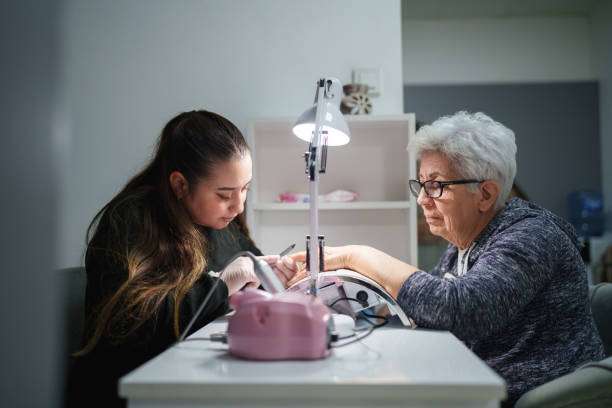
Before performing a nail drill, it is crucial to identify the customer type. Sensitive customers typically include:
- Thin skin around the fingers, prone to bleeding
- Thin stratum corneum, brittle nail surface
- Once overpolished
- Sensitive to vibration and sound
- Low pain threshold
- First time using electric equipment
- Skin sensitivity during pregnancy or hormonal period
- Excessive hand sweating and nervous tension
Using a nail drill can prevent 80% of the problems that follow.
Pre-Operation Assessment Process
Professional services don’t begin with starting the machine; they begin with the assessment.
Palpation Examination
Gently touch the cuticle and nail surface with a cuticle pusher:
- Is there any broken skin?
- Is it red?
- Is it cracked?
- Are the hangnails severe?
If micro-damage already exists, nail drills must be reduced in strength or converted to manual methods.
Ask About Historical Experiences
You can ask directly:
- Have you ever done machine polishing before?
- Do you feel any pain or fever?
- Have you ever experienced bleeding?
Many customers are too shy to ask, but if you take the initiative to ask, you can build trust.
Nail Drill Parameter Setting Principles for Sensitive Customers
The Engine Speed Should Be 20%–40% Lower Than Usual.
Regular adhesive removal: 12,000–18,000 RPM;
For sensitive customers: 8,000–12,000 RPM (safer).
Torque Takes Precedence Over Speed
A nail drill with stable torque is more suitable for sensitive individuals than one that is “high-speed but shaky.”
Use Point-to-Point Polishing
Do not stay in one place for an extended period:
Point—Move—Point—Move
instead of pressing in one position for a long time.
The Choice of Grinding Head Has a Significant Impact on Sensitive Customers.
Many discomforts are not due to machine problems, but rather to the selection of the wrong grinding head.
Grinding Heads More Suitable for Sensitive Customers:
- Fine-grained ceramic head
- Red/Yellow Circle Fine Lines
- Round head safety head
- Short tapered soft processing head
Try to Avoid:
- Coarse metal head
- Sharp edges
- Long-term use of the same head
A good nail drill paired with a suitable grinding head will significantly reduce the irritation.
Operational Pace: Slow Does Not Equal Dragging Out
For sensitive customers, it’s not about “the slower, the better,” but rather about “a steady pace.”
Incorrect rhythm:
rapid stop → rapid press → then stop
will cause a sudden sensation of heat.
Correct rhythm:
- Constant-speed sliding
- Stable strength
- Do not rub back and forth repeatedly
One common mistake with nail drills is “rubbing the same spot back and forth,” because that’s how heat is generated.
Three Key Techniques for Thermal Control
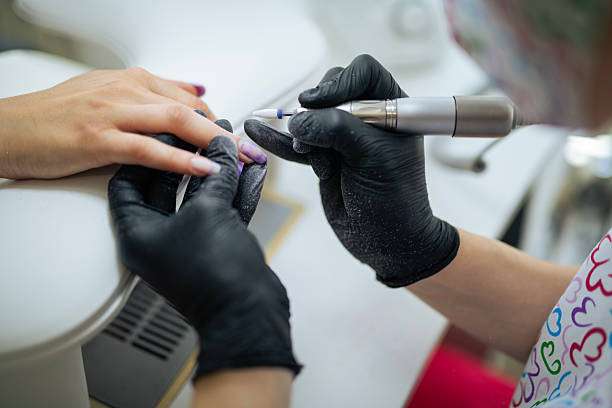
A light touch, no pressure, is needed for a nail drill; it relies on rotational speed, not pressure.
Lift the nail drill every 2–3 seconds.
Bidirectional movement with unidirectional friction is most likely to cause overheating.
The friend’s studio later stipulated that any nail drill must not stay at one point for more than 2 seconds, and complaints would be immediately reduced to zero.
The Psychological Impact of Sound and Vibration on Sensitive Customers
Many customers are not afraid of pain, but they are afraid of the “sound.”
You can inform us in advance:
“The machine will sound a bit like an electric toothbrush, but it won’t hurt. If you feel any discomfort, please let me know.”
Choosing a low-noise nail drill is crucial:
- Brushless motors offer smoother operation
- The shock-absorbing handle is more comfortable.
- A noise level below dB is preferred
Communication Skills Can Reduce Tension by Half
When serving sensitive clients, it is recommended to use the following:
- “This step will cause a slight vibration.”
- “Are you feeling okay?#8221;
- “Do you need me to slow down?#8221;
- “We can switch to manual labor.”
Continuous communication during a nail drill is safer than working in isolation.
Manual Operation Can Be Combined
Many experts do this:
- Machine rough processing
- Hand-finished
- Machine rapid transition
- Hand finishing
Sensitive customers do not need to perform a full-process nail drill; a hybrid approach provides a better experience.
Environmental Control Is Equally Important
Sensitive customers are also sensitive to external stimuli:
- Low temperature → Increased nerve sensitivity
- Dry hands → Increased friction
- The light was too bright → I became more nervous
Suggestions:
- Room temperature 24–26℃
- Apply softener first
- Apply heat for 30 seconds before operation.
I tried pre-treating with a hot towel before using a nail drill, and the comfort level definitely improved significantly.
Emergency Treatment When Discomfort Occurs
If the customer says:
- Heat
- Tingling
- Numbness
- Pain
Immediately:
- Stop nail drill
- Cold compress
- Modify handmade
- Reduce speed
- Replace the grinding head
Don’t force yourself to keep going; that’s the source of negative reviews.
Post-Service Care Recommendations
Sensitive clients need more postoperative advice:
- Apply cuticle oil
- Avoid contact with cleaning agents on the same day.
- Do not soak in water for 24 hours
- Avoid tearing off dead skin
Telling clients how to care for their skin enhances your professional image.
FAQ (Frequently Asked Questions)
Q1: Can sensitive clients completely avoid nail drills?
Yes, but it will be less efficient. I recommend a low-speed nail drill combined with manual mixing.
Q2: Is the machine faulty because the customer is afraid of heat?
Not necessarily. It could be that the grinding head is too coarse or the grinding time is too long.
Q3: Are more expensive nail drills less irritating?
Not absolutely, but a high-quality nail drill vibrates less and is easier to control.
Q4: Will sensitive skin always bleed?
No, if done correctly, there will be virtually no bleeding.
Q5: What should customers pay attention to when doing machine grinding for the first time?
Try pointing at one finger first to build trust before continuing.
Conclusion
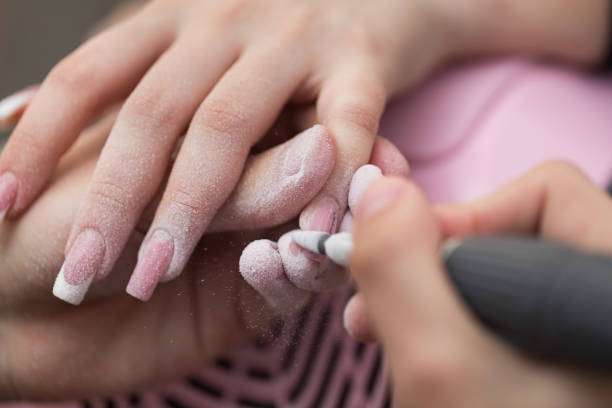
Sensitive customers are not “troublesome customers,” but rather the group most likely to become loyal customers.
As long as you can deliver on the promises of speed, grinding head, rhythm, and effective communication in your nail drill, they tend to value your professionalism more and are more willing to make repeat purchases over the long term.
If you are choosing a more stable, lower-vibration nail drill, it is recommended to prioritize professional models with low noise, high torque, and finely adjustable speed and use them with a fine-grit safety grinding head.
Good nail drill + correct methods = stable reputation and repeat customers.