
Some changes don’t happen suddenly. They come from long-term repetition: standing, walking, exertion, and friction. These changes may not be written on the face, but they remain in the thickness of the nails, in the roughness of the edges, and in the calluses that slowly form. And nail drills appear precisely in these details, becoming a tool unrelated to beauty but closely related to the long-term use of the body.
Time is not the same as age.
When many people hear the word “years,” they naturally think of getting old.
But in fact, the years are more like a cumulative effect.
People who often stand while working
People who walk or run around for long periods of time
People who frequently use both hands
People who repeat the same action for a long time
No matter what stage of life you are in, these behaviors will leave traces on your body.
Thickened nails, uneven edges, and calluses on the skin are all results of the body adapting to long-term use, not something specific to a particular age group.
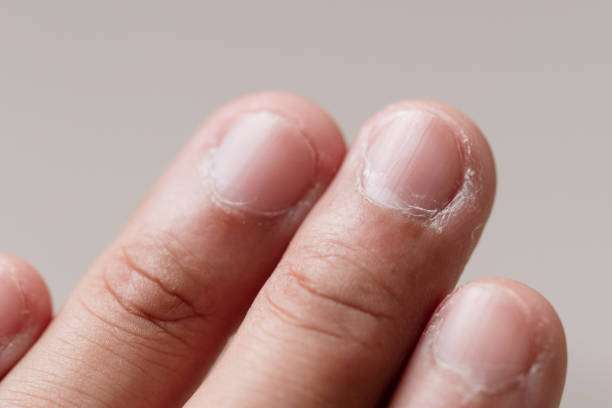
Changes in fingernails are often the first sign of trouble.
Compared to skin or muscles, nail changes are quieter, yet more persistent.
With long-term use:
nails gradually harden
No longer crisp when cutting
Burrs are prone to appear on the edges
It still doesn’t feel right after trimming.
These changes are not serious, but they will recur in daily life and slowly accumulate into discomfort.
Not just nails, but also those often-overlooked calluses.
Calluses are often the most honest feedback from the body.
They appear on the soles of the feet, the sides of the toes, and near the finger joints, resulting from continuous friction and pressure.
Often, we don’t consciously treat them; as long as they don’t hurt, we choose to ignore them.
Until one day:
Feeling of pressure while walking
It started to hurt after the shoes rubbed together.
The edges of the nails and calluses press against each other.
Only then did I realize that these seemingly minor issues had actually begun to affect my life.
I first really noticed these details during an ordinary routine care session.
When I was trimming my nails, I noticed that the edges were always a bit sharp after cutting, and I would easily scratch the skin next to my nails if I wasn’t careful. After switching to a nail drill, I can slowly round off the edges without rushing or having to apply repeated pressure.
The feeling wasn’t one of “greater efficiency,” but rather a more consistent process. It was then that I realized some care doesn’t need to be fast but rather controllable.
Traditional pruning methods cannot solve all problems.
Nail clippers address the issue of “length.”
but they are not always the most suitable tool when faced with changes after long-term use.
Thick nails require greater shearing force
Cutting can easily leave sharp corners
Calloused areas are not suitable for direct cutting.
This is why the problem doesn’t really disappear after many people prune it.
nail drills: not to solve the problem all at once, but to adjust gradually.
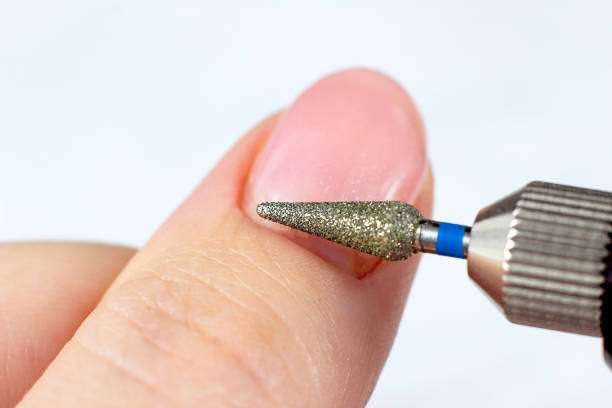
Nail drills use a completely different approach.
It does not pursue “speed,” but emphasizes:
low-speed contact
Controllable polishing
Multiple fine-tuning
This method better reflects the actual state of the body after long-term use.
Why use a nail drill to grind?
1. More nail-friendly
The shape is gradually changed by polishing, rather than being forcibly cut off.
2. Gentler on calluses
Calluses aren’t the problem; the problem lies in their thickness and edges. Polishing them layer by layer reduces discomfort, rather than damaging the protective layer.
3. Greater control over the operator
No effort is required, the process is stable, and you can stop at any time.
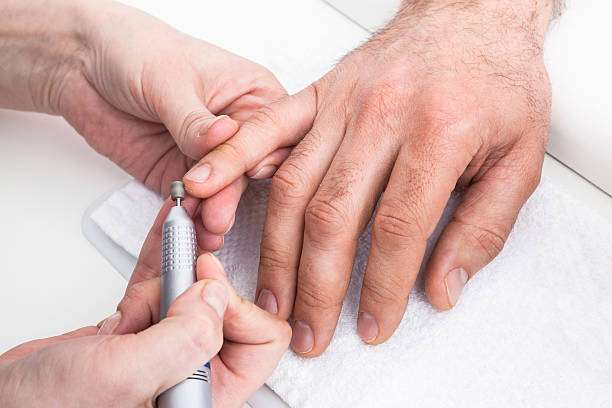
The small details of being treated gently can affect your mood throughout the day.
Many people don’t care about how clean the repairs are;
What they care about is
Is it comfortable to walk?
Is it smooth when using your hand?
Are daily activities interrupted?
When the edges of your nails are no longer sharp, and when calluses no longer cause pressure, these changes, though subtle, will be felt repeatedly throughout the day.
Nail drills are quietly changing.
It is no longer just a nail tool but is gradually entering daily care scenarios.
From Decoration to Maintenance
From Efficiency to Comfort
From “good-looking” to “useful”
This is why more and more people are beginning to see nail drills as a long-term care tool.
What precautions should be taken when using a nail drill?
High speed or complex functions are not required in all scenarios.
In daily care, what is more important is
Clear speed adjustment
Stable operating status
Simple and intuitive operation logic
A nail drill suitable for people who use their bodies for extended periods should be restrained and reliable.
FAQ
Q1: Are nail drills only for beauty or manicures?
A: No. Nail drills are increasingly used for daily care, especially for thick nails, rough edges, and calluses caused by long-term wear and use.
Q2: Can a nail drill help with calluses?
A: Yes. Nail drills polish calluses gradually instead of cutting them directly, helping reduce thickness and edge pressure while keeping the skin comfortable.
Q3: Why don’t nail clippers solve recurring nail edge problems?
A: Clippers only shorten length. They often leave sharp corners and can’t address hardened nails or layered calluses caused by long-term friction.
Q4: Is grinding safer than cutting for thick or hardened nails?
A: In many cases, yes. Low-speed grinding offers better control and reduces sudden force, making the process gentler and more stable.
Q5: Do nail drills require strong hand force to use?
A: No. Nail drills rely on controlled movement rather than pressure, making them suitable for people who use their hands or feet extensively.
Q6: What kind of nail drill is suitable for daily long-term care?
A: A nail drill with clear speed control, stable operation, and simple functions is better suited for comfort-focused, long-term use.
Time doesn’t need to be erased.
Calluses are not a defect, and changes in nails are not a problem.
They are simply traces left on the body after prolonged use.
What really matters is not eliminating these traces, but ensuring they no longer affect the comfort of life.
The passage of time is not a label for a certain age group but rather the accumulation of time on the body.
Nail drills can’t turn back time, but they can make trimming gentler and more controllable.
This, perhaps, is its true value.
If you’re looking for a more controllable and comfortable daily nail and edge care tool, you might want to check out a nail drill, which is suitable for long-term use.
Click to view our nail drill series, bringing comfort and control back to pruning.