Say goodbye to self-consciousness about short, thick nails: nail drills reshape the nail bed line, subtly changing the appearance of your hands.

Many people first become aware of the term “short, thick nails” not because someone said it, but in a fleeting moment—unconsciously pulling their hand back when taking a photo, feeling something’s off when trying a new manicure, or feeling a sudden sense of loss seeing others with long, slender fingertips and clean nail surfaces. Nails are small, yet they can easily become a blind spot for self-confidence. In recent years, more and more professional nail technicians have begun using nail drills to gently and controllably improve these details, altering the visual proportions of the nails.
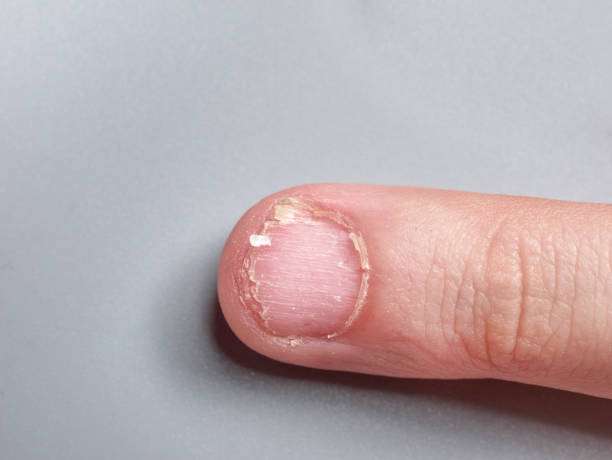
Is a short, thick nail simply a matter of short nails?
Many people’s understanding of short, thick nails is actually inaccurate.
From a professional nail technician’s perspective, “short and thick nails” are usually caused by a combination of the following factors:
The nail bed line is covered by keratin, and the actual length of the nail bed is “eaten up.”
Dead skin buildup on the sides of the nail makes the nail appear wider horizontally.
Cutting nails too short for a long time or biting nails will cause the nail bed line to recede continuously.
Uneven nail surface, lacking a visual sense of vertical extension.
In other words, the problem is not “length,” but “sense of structure.”
I was like that myself. I used to think that my nails “couldn’t grow out.” Later, during a systematic nail care session, I discovered that the keratin at the nail root and sides had not been properly treated for a long time, and the real nail bed was covered by at least 2-3 millimeters.
Why is it so difficult to improve short, thick nails using traditional trimming methods?
When caring for oneself at home, many people usually choose:
Trimming nails
Push the dead skin
Use a file to roughly shape it.
These steps are not wrong, but the problem is
The force is uncontrollable and can easily damage the nail edge.
Incomplete removal of dead skin only results in a “surface clean” appearance.
Unable to precisely process the junction between the nail side and the nail root
Over time, the nail bed line becomes increasingly blurred.
What truly determines whether nails appear long or not are precisely these millimeter-level details.
Nail drill: Not more ruthless, but more precise.
When many people hear “nail drill,” their first reaction is:
Will it damage my nails?
Is it only suitable for professional nail salons?
In fact, the core advantage of nail drills lies not in their speed but in their controllability.
Compared to manual tools, it has three key changes:
1. Thoroughly clean the nail bed line to release the true length.
Using low speed and a fine grinding head, nail drills can:
Clean the dead skin cells covering the nail root.
Clearly define the boundary between the nail bed and the nail cuticle.
Let the nail bed “reveal” its original length
Many people find that after using it correctly for the first time,
Their nails don’t actually grow longer, but they look noticeably longer.
2️⃣ Trim the sides of the nail to reduce the appearance of “horizontal expansion.”
Short, thick nails are often not because they are not long enough, but because they are too wide.
A nail drill can gently trim along the side edge of the nail:
Remove accumulated dead skin cells
Straighten the sidelines.
Make the nail outline more defined
This step is crucial because narrowing the nail horizontally and extending it vertically is the core logic for improving short and thick nails.
3️⃣ Improves nail surface smoothness and enhances vertical visual appeal.
An uneven nail surface visually “cuts off” the vertical extension of the nail.
With the right grinding head and rotation speed, a nail drill can:
Smooth nail surface
To lay a good foundation for subsequent nail care or manicure
This allows the light to be reflected more concentratedly in the longitudinal direction.
This is why many professional nail technicians emphasize that
The condition of the nail surface directly affects the appearance of the hand.
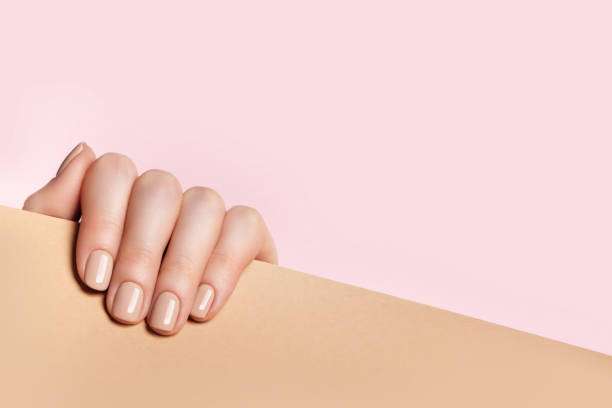
Reshaping the nail bed line is not something that can be done overnight.
It is important to emphasize that
Nail drills are not “magic tools.”
When it truly comes into play, it often follows three principles:
Gradual, rather than a one-time “clearing out.”
Improving the nail bed line usually requires 3–6 regular treatments to gradually stabilize the nail bed position.
Mildness first
Excessive speed and cleaning can actually stimulate the cuticles to retract, which is counterproductive.
In conjunction with daily maintenance
Using nail polish, reducing nail biting, and avoiding frequent, overly short nail trimming will all affect the final result.
In my experience, as long as the method is correct, most people can see a very obvious change in their nail bed line in about a month.
Why does this change affect self-confidence?
Many people underestimate the psychological impact of “hand details.”
When you discover:
No longer deliberately hiding hands when taking photos
Light-colored nail polish doesn’t make them look short.
The finger lines are cleaner and more orderly.
The feeling wasn’t that I “became prettier,” but rather that
I was finally no longer uncomfortable about a small detail.
This is precisely the hidden value that the nail drill brings beyond the nursing aspect.
beginners pay attention to when using a nail drill?
If this is your first time trying this, we suggest you pay attention to the following points:
Select an adjustable-speed nail drill.
Prefer using fine grinding/polishing heads.
The treatment time for each nail should not be too long.
If you feel any discomfort, stop immediately.
The tools themselves are not the problem; the method is the key.
FAQ
Q1: Are short, thick nails really caused by nails being too short?
A: Not exactly. In most cases, short, thick nails are caused by a blurred nail bed line, excess cuticle buildup, and widened sidewalls—not actual nail length.
Q2: Can a nail drill really make nails look longer?
A: Yes. Nail drills help clean the nail bed line and side edges, allowing the true nail bed length to visually reappear, making nails look longer without growing them.
Q3: Will using a nail drill damage the nails?
A: Not when used correctly. Low-speed and fine-grinding heads allow precise, gentle care without harming the nail surface or cuticles.
Q4: Why can’t regular nail clippers fix short, thick nails?
A: Clippers only shorten nails and cannot accurately clean the nail bed line or side structure, which are key to improving nail proportions.
Q5: How long does it take to see improvement in the nail bed line?
A: With proper and regular care, many people notice visible improvement within 3–6 weeks.
Q6: Is a nail drill suitable for beginners?
A: Yes, as long as you choose an adjustable-speed nail drill and focus on gentle, gradual treatment rather than aggressive filing.

Short, thick nails are not your problem.
Many feelings of inferiority stem not from being truly bad, but from not having been treated properly.
When you begin to understand nail structure and
start taking care of yourself in a gentler, more professional way.
You will find that change can be quiet yet powerful.
If you are also troubled by short, thick nails and hope to gradually improve the ratio of the nail bed line to the nail without damaging it, a
A nail drill with controllable speed and suitable for delicate care would be a safer and longer-lasting option.
Why not start with a gentle nail drill treatment and let the changes happen slowly, instead of sighing over your fingertips?