Why is the nail drill the ultimate tool for achieving a mirror finish ?

If your ultimate nail polish goal is a natural, mirror-like shine without the need for polish, then you need to re-evaluate your polishing tools.
I used to be just like you, spending 20 minutes buffing my nails with a four-sided polishing block until my wrists ached, only to find a fine, hazy finish. While traditional sanding sponges or four-sided polishing blocks are gentle, they require a lot of effort, time, and the resulting shine isn’t always sustainable.
In modern nail art, the nail drill is no longer just a crude tool for removing or shaping nails. Paired with specialized polishing bits, it can elevate your nails to salon-quality perfection with unprecedented precision, efficiency, and durability. It’s time to understand why the nail drill outperforms traditional hand files when it comes to polishing.
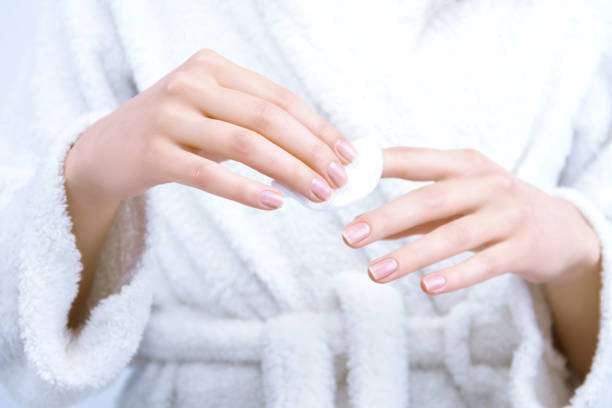
The Secret to Ultimate Gloss: Friction Efficiency and Consistency of Electric Drills
The polishing effect of traditional hand files depends on manual strength and speed, which is the fundamental reason why it is difficult to achieve the ultimate gloss.
Speed and heat: Activate natural shine
Limitations of traditional hand files: Whether using a polishing block or a polishing strip, manual abrasion has its limits. It’s difficult to achieve sufficient speed and heat quickly enough to activate the keratin structure on the nail surface and align it tightly. The resulting shine is often a temporary “waxing” effect, rather than a deep, reflective finish.
nail drills : Electric drills use silicone or felt tips, which provide continuous, even friction at very low speeds. This steady, low-speed motion gently applies even pressure to the nail, smoothing the nail surface to its optimal level, resulting in a natural, long-lasting mirror finish.
Consistency Control: Say Goodbye to Polishing Blind Spots
Traditional polishing blocks struggle to maintain perfect contact with the nail surface in areas with large curvatures, such as the edge, sidewall, or base of the nail (nail border). The conical or spherical polishing bits used with nail drills easily adapt to these subtle curvatures, ensuring a uniform polish across the entire nail surface, including the edges, eliminating the blind spots associated with traditional tools.
Before I got a nail drill, there were always flaws in the polish of my nails, and some areas were difficult to contact with the file .
Say goodbye to physical exhaustion:
Polishing is one of the most patient and repetitive steps in the entire manicure process, and it consumes a lot of physical energy from the operator.
Reduce the burden on operators
Prolonged polishing with a hand file is a major cause of wrist and finger fatigue for nail technicians and DIY enthusiasts. A nail drill handle is lightweight, requiring only guidance during work. For professionals who perform extensive polishing services, using an electric drill can effectively prevent repetitive strain injuries.
Use precise materials to achieve twice the result with half the effort
If using a felt polishing head, only a minimal amount of polishing paste or oil is needed. The high friction of the electric drill maximizes the effectiveness of these polishes, evenly distributing them and quickly brightening the surface without the greasy feeling or residue that can result from overdosing with polishing paste as with traditional methods.
Comparison of safety and durability of polishing
While many people consider hand files safer, a nail drill provides greater control when performing the correct finishing steps.
Gentle upgrade of drill bit material
For polishing natural nails, an electric drill uses a soft silicone or wool felt drill bit, which is gentler than a coarse sandpaper strip. As long as it is controlled at the recommended low speed, it is much less aggressive to the natural nail than a coarse sandpaper hand file with excessive force.
Prevent over-polishing and thinning
Preventing over-polishing and thinning is a core advantage of electric drills. Traditional polishing can easily thin nails due to excessive pressure. A nail drill, on the other hand, provides clearer visual and auditory signals: a steady sound and no heat indicate safe operation. This allows the operator to more precisely control the depth of the polish, removing only minor surface irregularities without damaging the healthy nail layer.
When I used to polish with a nail drill , I was always unsure how long to linger on each side, which resulted in my thumb getting overheated. Once I got the hang of it , I quickly brushed across the nail surface at a low speed, and my nails became shiny in no time, completely eliminating the worry of heating and chipping.

In conclusion :
a nail drill in polishing lies in its perfect combination of mechanical stability and efficiency with the gentleness of the drill bit material. It allows you to achieve a long-lasting, natural mirror-like finish that is difficult to achieve with traditional tools, with minimal effort and in the shortest possible time.
If you’re after the ultimate polish and want your nails to shine confidently even without any product, it’s time to add a professional electric polishing drill to your toolkit.
What are your insider tips for avoiding overheating when trying power polishing at home?