Home vs. Commercial Nail Drills: Differences You Must Understand Before Buying

choosing a nail drill, many people encounter the same question: what are the differences between
home and commercial nail drill models? If you’re undecided, this article will help you thoroughly understand the core differences, including power, functionality, durability, user experience, and price point. The article will specifically explain which users a home wireless nail drill is suitable for, allowing you to make the most appropriate choice within your budget.
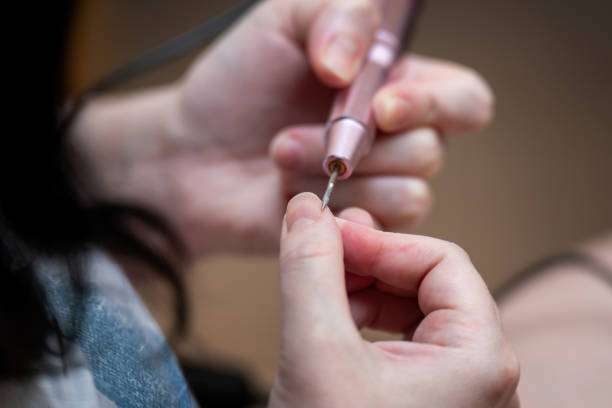
Why are nail polish rhinestones divided into home and commercial types?
It’s primarily responsible for steps such as nail polishing, buffing, removing nail polish, and exfoliating. However, different usage scenarios have completely different requirements for stability, battery life, and motor performance.
Simply put:
Home use: Designed for lightweight use, simpler to operate, lower noise, and a more affordable price. Some models feature a wireless design for greater flexibility.
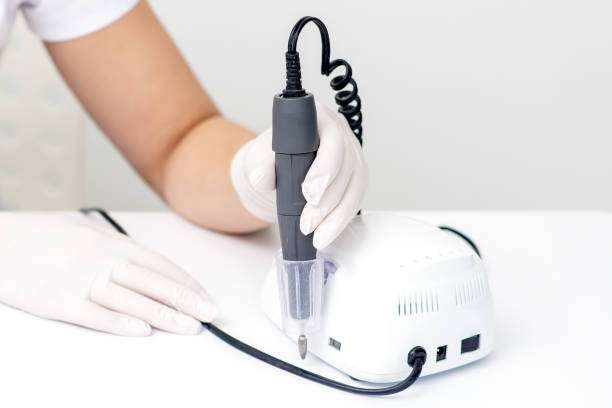
Commercial use: Designed for nail salons that operate continuously for long periods of time, it features strong power, low heat generation, and a long lifespan, allowing it to work stably for several hours in a row.
Regardless of which one you buy, understanding the differences is the first step to avoiding making a mistake.
Core Difference 1: Power and Speed
1. Home power
Home-use models typically operate at speeds between 8,000 and 25,000 RPM.
This is more than sufficient for general nail removal, shaping, and light polishing.
Many cordless home nail drills, despite their small size and light weight, are surprisingly powerful and easy for beginners to handle.
Applicable to:
People who get manicures occasionally
People who remove their own armor
People who don’t pursue professional carving or high-strength hard nail treatment
The driving force behind commercial nail drills
Commercial models typically offer 30,000–40,000 RPM (or even higher), with higher speeds allowing for faster processing of hard nails, gel nails, and thick nail polish.
They also have greater torque, making them less prone to jamming when applying force.
Applicable to:
Nail salon professional technician
A nail technician who needs to work with dozens of customers a day
People who need nail extensions, sculpting, or hard nail removal
Power is one of the biggest differences between home and commercial nail drills. Home use is perfectly adequate, but professional applications require a commercial model.
Core Difference 2: Stability, Noise, and Vibration
Home use model: Lightweight and quiet
Home-use nail drills are designed with comfort in mind, and many wireless models have very low vibration to prevent hand numbness. Noise levels are mostly kept below normal conversation volume.
This is a significant advantage for those using them at home at night.
Commercial version: High stability, long-term continuous operation
Commercial nail drills feature superior cooling systems and professional-grade motors, prioritizing stability over quiet operation.
They maintain stable heat even after 4-6 hours of continuous use, and their excellent vibration control minimizes fatigue for technicians operating for extended periods.
I first used a home wireless nail drill; I found that its noise level was lower than I expected, and it wouldn’t disturb my family at night. This was one of the main reasons why I later recommended it to my friends.
Core Difference 3: Handpiece and Grip
Home-use controller: Lighter and more suitable for beginners
Home nail drills feature lightweight handles, making them easy for beginners to use. Wireless models are especially lightweight, preventing wrist strain when filing nails.
Commercial handles: more stable, more durable materials
Commercial models typically use a metal structure or a higher-grade motor, and while the handle is slightly heavier than that of home models, it offers greater stability and precision.
For nail technicians who need to use these models for extended periods, a stable grip is more important than weight.
Core Difference 4: Whether wireless is supported
One of the biggest advantages of home use: wireless design
Many home nail drills offer wireless functionality, making them very flexible for everyday use.
Unrestricted by socket
The room can be used anywhere
You can also bring it on your trip
There will be no problem with the wires getting tangled.
While the power of the wireless version may be slightly weaker than that of a top-of-the-line commercial model, it is more than enough for everyday nail removal and manicures.
Most commercial models are still wired.
To ensure stable output and long-term operation, commercial nail drills are generally wired.
Their core objectives are continuous, professional, and powerful.
Core Difference 5: Heat Dissipation Capacity and Durability
Home use
Home-use nail drills are suitable for use 1-3 times a week, and the cooling system doesn’t need to be extremely powerful. If used for extended periods occasionally, you may feel some heat, but this is within the normal range.
Commercial version
Commercial machines have professional-grade heat dissipation channels, allowing them to work continuously for a whole day without affecting performance and without issues such as lag or increased vibration.

Core Difference 6: Operating Functions and Number of Accessories
The home-use model has simple but sufficient functions.
Common features include:
Speed control knob or button
6–12 basic grinding heads
Switching between forward and reverse directions
The wireless version comes with a charging dock.
For the average nail technician/nail remover user, a home nail drill is already quite comprehensive.
The commercial version has more professional functions.
Typically, there are:
Precise stepless speed regulation
Higher torque
More heat-resistant ceramic grinding heads
More sensitive foot switch
Longer lifespan brushless motor
For high-frequency, high-intensity nail services.
Core Difference 7: Price Gap
| type | Price range | Features |
| Home nail drill | $20–$80 (Wireless version approximately $40–$100) | Beginner-friendly, lightweight, low noise, and suitable for personal use. |
| Commercial nail drill | $150–$400+ | High performance, low vibration, and high durability make it the preferred choice for professional technicians. |
How can you determine whether a residential or commercial property is more suitable for you?
You can quickly determine this based on the following points:
Choose a home-use nail drill if you:
Do manicures only 1–3 times a week
It’s just simple armor removal and shaping.
Want more convenient wireless operation
Limited budget
More emphasis is placed on low noise, lightweight, and safety.
→ Home wireless will satisfy you greatly.
If you choose commercial use:
Frequent use every day
Need to treat hard nails, sculpted nails, and thick nail polish
Want high RPM and high torque?
Want a more stable motor with a longer lifespan
Are you a professional technician or someone who is learning professional nail art?
Wireless nail drills for home use: Why are they becoming increasingly popular?
Wireless nail drills have become particularly popular in recent years, and the reason is simple:
Small and lightweight
Low noise
No tangling
Battery life improves year by year
It’s easier for beginners to get started.
If you’re just using it at home, this is the most worthwhile model to buy, offering excellent value for money.
Frequently Asked Questions (FAQ)
1. Can a home nail drill remove gel nail polish?
Yes, it’s possible, but it will be a little slower than commercial models. With patience, you can safely remove gel nails.
2. Are commercial nail drills louder?
Not necessarily. On the contrary, because of their higher motor grade, many commercial machines have more stable noise control.
3. Is the battery life of the wireless nail drill sufficient?
It is sufficient for home use, and a typical operation only takes 20–30 minutes.
4. Will a home nail drill damage my nails?
As long as the speed isn’t too high and the grinding head angle is correct, it won’t damage your nails. The power of the home-use model is also easier to control.
In conclusion:
If you are a regular user who prefers self-removal of nail polish and enjoys a relaxed and simple operating experience, then
A cordless home nail drill is more suitable for you.
If you are a nail technician, apprentice, or someone who needs to work on strong, hard nails, then
A commercial nail drill is an essential investment.
Whichever you choose, as long as you buy according to your usage frequency and needs, you’ll find the one that best suits you. Want to learn more about the story of the nail drill? Click to view!