Nail drill use: Create a safe, comfortable, and efficient nail art experience.

Nail drills are an indispensable tool for modern nail art enthusiasts and professional nail technicians, enjoying widespread popularity in the market for their efficiency, precision, and versatility. However, many people focus only on the model and functions when purchasing and using nail drills, neglecting the impact of the usage environment on the results, safety, and lifespan. This article will analyze nail drill usage environment recommendations from multiple perspectives and share some personal experiences to help you create your ideal nail art experience.

Choose a quiet and clean environment.
A clean and quiet environment is crucial when using a nail drill. Nail drills can generate noise when running at high speeds; a noisy environment can affect operational accuracy and may disturb clients or family members. Furthermore, dust and debris can easily fall into the drill bit and inside the equipment, affecting the drill’s operation and lifespan.
suggestion:
Choose a well-ventilated, well-lit space and avoid dampness and dust accumulation.
Use a desktop organizer to tidy up your nail tools and reduce clutter.
For home use, you can place a dustproof mat or nail work mat on the desktop to protect the desktop and reduce the impact of dust.
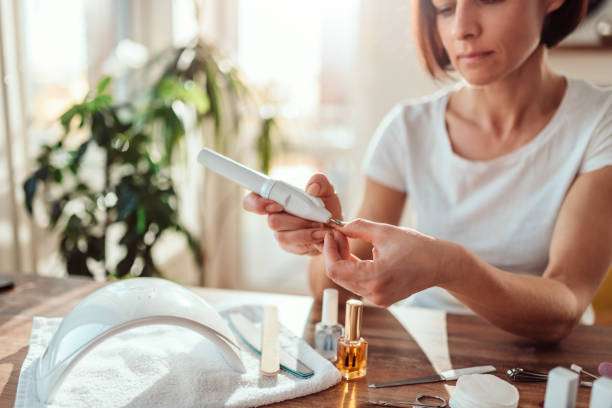
I use a nail drill at home; I specifically set up a small table next to the balcony. This allows me to utilize natural light while maintaining air circulation, preventing drill dust from scattering to other parts of the house and making cleaning very convenient.
Good lighting environment
Nail art requires a high level of attention to detail, and the precise operation of a nail drill demands a clear field of vision. Insufficient lighting or uneven light sources can easily lead to uneven filing or operational errors, affecting the final nail art result.
suggestion:
Use a bright LED desk lamp with predominantly white light to avoid yellow or cool light sources affecting color perception.
You can choose lamps with adjustable angles and brightness and flexibly adjust the light according to the user’s posture.
In situations where natural indoor light is insufficient, it is recommended to use both a table lamp and a ceiling light to ensure even lighting.
When I first started using a nail drill, I often experienced uneven grinding of the drill bit due to insufficient lighting. Later, I switched to a desk lamp with adjustable brightness, which significantly improved my operating accuracy.
Suitable temperature and humidity
Nail drills generate frictional heat during operation. If the ambient temperature or humidity is too high, it will accelerate the aging of the equipment and may even affect human comfort and operational stability.
suggestion:
20–25°C,The ideal operating temperature is 20–25°C and the humidity is 40%–60%.
Avoid using it in environments with direct sunlight or direct heat from heating systems to prevent plastic parts from deforming or the motor from overheating.
If operating in hot summer weather, fans or air conditioning can be used to regulate the temperature to ensure comfortable operation.
Safe use of electricity and selection of sockets
Nail drills are electrically powered devices, making safe electrical use paramount. Unstable voltage or substandard sockets can easily cause equipment malfunctions and even create safety hazards.
suggestion:
Use sockets or power strips with overload protection to avoid damage caused by unstable voltage.
Ensure the socket is dry and secure, and prevent water droplets or liquids from splashing in.
Regularly check the power cord and plug for damage, and replace them promptly if any problems are found.
I once used an old socket at home, and my nail drill suddenly stopped. After checking, I found that the voltage fluctuation caused the motor protection mechanism to activate. Since then, I have only used sockets with overload protection.
Comfortable operating posture and table and chair height
Prolonged use of a nail drill can easily cause fatigue in the wrists, shoulders, and neck. Proper operating posture and the height of the table and chair can reduce the risk of occupational diseases and improve operating efficiency.
suggestion:
or beingKeep the desk height at the level where your elbows are naturally bent, avoiding your arms dangling or too low.
Choose a chair with a comfortable backrest and adjustable height to keep your spine naturally straight.
Take regular breaks, and move your wrists and shoulders every 30–40 minutes to relieve fatigue.
Reasonable noise control
Although nail drills are quieter than traditional grinding tools, prolonged use can still cause discomfort. Good noise control not only protects hearing but also improves the work experience.
suggestion:
Choose a low-noise nail drill, or place a vibration-damping pad under the equipment.
If operating at home, you can lay carpets or soft mats in the operating area to reduce resonance.
When operating the equipment for customers, inform them in advance and provide earplugs to reduce noise interference.
I used to operate it in the living room, but my family thought it was too noisy. Later, I moved it to a small corner and used a vibration damping pad and a low-noise drill, which significantly improved the operating experience.
Avoid clutter and keep your desktop tidy
When operating a nail drill, it’s important to keep the work surface clean. Too much clutter not only affects efficiency but can also create safety hazards, such as the drill bit breaking or scattering when it hits a hard object.
suggestion:
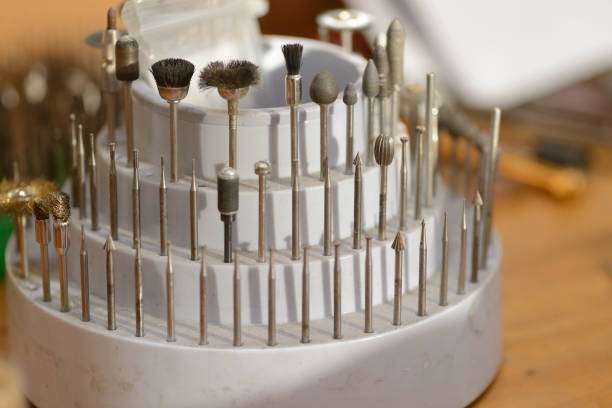
Organize frequently used tools (drill bits, nail polish, gel polish) into categories and keep your desktop clean.
Drill dust should be cleaned up promptly to prevent accumulation.
Use a specialized dust extractor or a small broom to keep the work area clean.
Ventilation and air purification
Nail drills produce drill dust and micro-dust during the polishing process, which can irritate the respiratory tract if inhaled for extended periods. Good ventilation can reduce this risk and improve the comfort of the working environment.
suggestion:
Operate in a room with natural ventilation, or open windows to keep the air circulating.
Use a small air purifier or exhaust fan to reduce the amount of diamond dust and chemicals suspended in the air.
Wear a mask while operating the equipment, especially if you are a sensitive person or are operating it for a long time.
When I file my nails at home for extended periods without ventilation, I sometimes experience throat discomfort. After placing a small air purifier in the work area and keeping the window slightly open, breathing becomes much more comfortable.
The proper combination of light source and mirror
Nail art procedures require careful observation of the nail details. In addition to good desk lighting, using a mirror can help observe the nails from various angles, improving the precision of using nail drills.
suggestion:
Use a small, adjustable makeup mirror to observe the sides and curvature of the nail surface.
To avoid glare from direct light, you can choose a combination of soft lighting and a mirror.
Place a tool storage box next to the mirror to reduce the frequency of hand movements.
Summarize:
In general, the environment in which a nail drill is used directly affects the comfort, safety, and nail art results. Choosing a quiet, clean, well-lit, and well-ventilated space, and paying attention to temperature, humidity, noise, and the height of the table and chairs, can greatly enhance the nail art experience. In my personal experience, following these environmental recommendations not only made the procedure easier but also significantly reduced wrist and shoulder fatigue, resulting in a higher level of nail art completion.
As a highly efficient and precise tool, nail drills can achieve optimal results when used in the right environment, whether at home or in a professional nail salon.
If you also want to improve the efficiency and comfort of your nail art, choose a high-quality nail drill now and create your ideal nail space by following the usage environment suggestions above!