When nail drills enter the world of the elderly: neglected comfort and dignity

In most people’s minds, nail drills seem to be synonymous with young people, nail salons, and a sophisticated lifestyle. But if we look away from shop windows and short videos, we’ll find another group of people who also need it but have long been neglected—the elderly.
As people age, many everyday tasks become difficult, and “trimming nails” is one of them. It is against this backdrop that nail drills are gradually becoming a part of the lives of the elderly, playing an unexpected yet very important role.
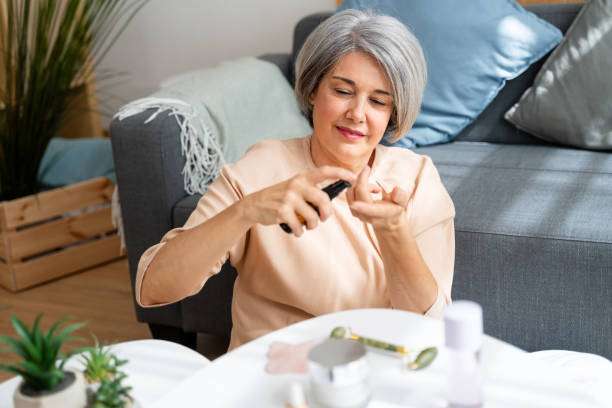
Trimming nails for the elderly is actually not a simple matter.
For young people, trimming nails is a simple task that can be done in a few minutes. But for many elderly people, it is a “high-risk activity.”
1. Nails become thicker and harder
As metabolism slows down, older adults’ fingernails often:
The thickness has increased significantly.
The texture hardens and becomes prone to separation.
Ordinary nail clippers are difficult to cut with.
Some elderly people even need to use a lot of force to cut off a small piece of their nail, a process that is both strenuous and unsafe.
2. Decreased hand strength, difficulty with fine motor skills.
Many elderly people exist:
Handshaking
Insufficient grip strength
stiff or painful joints
When using traditional nail clippers, it’s easy to cut unevenly, cut too deep, or injure the skin. Even a small cut can mean a risk of infection for an elderly person.
3. Decreased vision increases the probability of accidents.
Blurred vision makes it difficult for the elderly to judge the position of the scissors, especially when it comes to toenails, which they cannot see clearly, reach, or cut properly.
This is why many elderly people would rather “make do with it and not cut it” than dare to do it themselves.
nail drills more suitable for the elderly?
When we step outside the conventional understanding of “nail tools,” we find that nail drills are essentially a gentler and more controllable nail care tool.
1. Grinding instead of shearing is safer.
Compared to nail clippers that cut straight down, nail drills use a low-speed filing method to shape nails:
Reduce instantaneous force
It is not easy to cut the skin
More friendly to thick nails
For the elderly, this “slower” approach actually makes them feel more at ease.
2. Effortless operation, reducing physical burden.
The adjustment can be completed by gently holding and slowly moving the handle; there is no need to press repeatedly. This is especially important for elderly people with weak hands or joint problems.
3. Smoother finish, reducing subsequent discomfort.
Many elderly people leave sharp edges after trimming their nails, which can easily cause:
Slipped on socks
Scratching yourself
Scratching family members
A nail drill can buff and polish nails simultaneously, resulting in smoother, more rounded edges and greater comfort in daily life.
I first realized this when I was cutting the nails of an elderly person in my family.
That time, I discovered that regular nail clippers could barely cut his toenails, and he said, “Forget it, I won’t cut them; it’ll hurt anyway.” Later, I tried using a low-speed nail drill to slowly file them for him. The whole process wasn’t fast, but he was noticeably more relaxed.
It was at that moment that I realized it wasn’t that the elderly didn’t like taking care of themselves, but rather that the tools weren’t suitable for them.
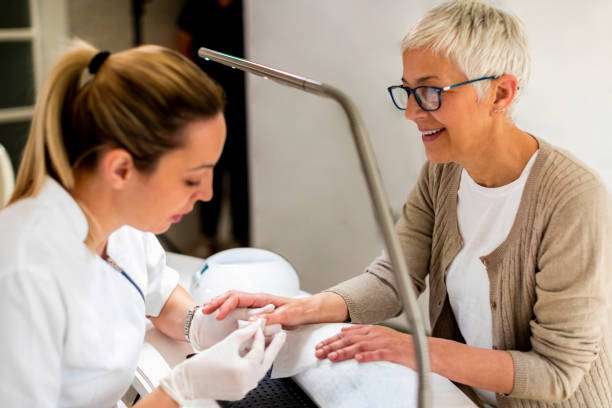
nail drills for the elderly
1. Not just a tool, but dignity.
Being able to groom one’s own nails is a sign of independence. For older adults, retaining this ability means dignity and self-confidence, rather than “needing others for everything.”
2. Reduce caregiver stress
For family members or caregivers:
Reduce the risk of cuts
More controllable operation
No professional skills required
This is why more and more elderly care institutions are starting to pay attention to nail drills.
3. Suitable for daily home care
Compared to frequent out-of-home trimming, nail drills are more suitable for regular home care, especially for elderly people who have limited mobility or do not wish to go out.
What precautions should elderly people take when using a nail drill?
Not all products are suitable for the elderly, and extra caution is needed when choosing them.
1. Low gear positions must be clearly defined.
Smooth start
Multiple adjustments
It is not easy to accelerate suddenly
This is the foundation for safe use by the elderly.
2. Keep the noise level low to reduce tension.
Excessive noise will cause elderly people to instinctively resist, while quiet operation is more acceptable.
3. The handle has a non-slip grip and a moderate weight.
Too light and it’s hard to control; too heavy and it’s tiring. An anti-slip design reduces the risk of hand tremors.
4. Simple accessories, not pursuing complex functions.
For the elderly, ease of use is more important than multiple functions. Too many grinding heads actually increase the difficulty of use.
FAQ
Q1: Are nail drills safe for elderly people?
A: Yes. Low-speed nail drills file nails gradually instead of cutting, reducing the risk of skin injury and making them safer for seniors.
Q2: Why are nail drills better than nail clippers for the elderly?
A: Elderly nails are often thicker and harder, and hand strength is reduced. Nail drills require less force and are easier to control.
Q3: Can elderly people use nail drills by themselves?
A: Many can, as long as the drill has low-speed settings and simple controls. Assistance is recommended if vision or hand stability is limited.
Q4: Are nail drills suitable for elderly toenails?
A: Yes. They are especially helpful for thick toenails that are hard to reach or difficult to cut with clippers.
Q5: What speed should elderly users choose?
A: Always use the lowest speed setting to ensure comfort and safety.
Q6: Do nail drills help caregivers as well?
A: Yes. They reduce the risk of accidental cuts and make nail care easier for family members and caregivers.
Nail drills are changing overlooked details.
We often talk about “age-friendly design,” but the real changes are often hidden in these seemingly insignificant little tools.
When nail drills enter the world of the elderly, they bring not only neat nails but also a safer and more dignified lifestyle.
If young people use nail drills for aesthetic reasons, then older people use them for comfort, safety, and dignity.
And these are precisely the needs that deserve the most serious attention.
If you’re looking for a safer and easier nail care solution for your parents or elders, consider a low-speed nail drill suitable for seniors.
Click to visit our product page and view our nail drill, designed specifically for everyday care, so that care begins with the details.