
In practical use, many people encounter a particularly annoying situation: the nail drill suddenly loses power, works intermittently, or the speed fluctuates, or it may even fail to start at all.
This not only affects the smoothness of operation but may also cause nail scratches, uneven cuticle removal, and, in severe cases, even damage to the nails.
If you’re also experiencing recurring power outages with your nail drill, this article will help you thoroughly troubleshoot the problem. We’ll analyze the causes from multiple angles, including power supply, chassis, motor, control system, wiring, and usage habits, and provide the most practical solutions.
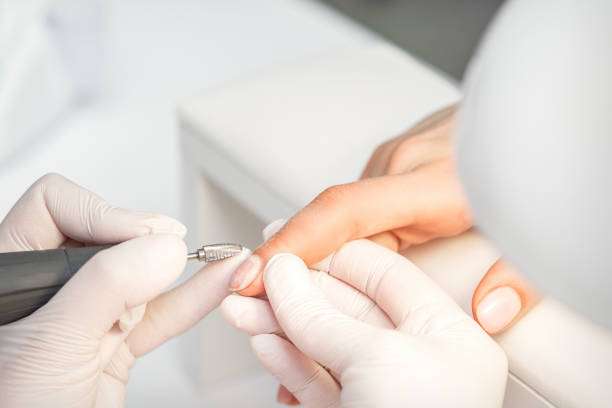
Overview of the core reasons why nail drills keep losing power.
The vast majority of power outages are related to the following six factors:
Unstable power supply or insufficient power supply
The nail drill handle has become loose.
Motor jamming, overheating, or wear
Control box (main unit) circuit board failure
Drill bit jamming and excessive resistance triggers protection mechanism
Usage habits can cause wire damage or loose connections.
Next, we will break it down one by one so that you can identify the problem yourself.
Reason 1: Unstable power supply or insufficient power supply
This is the part that beginners are most likely to overlook.
Possible manifestations:
The nail drill shuts off as soon as it accelerates.
The speed of operation varied.
The power goes out as soon as the socket is moved.
The light is on, but the drill won’t turn.
Investigation methods:
Replace with a stable outlet (especially avoid sharing the same outlet with high-power appliances).
If it’s a wireless nail drill, check if the battery level is low or if the battery is old.
Try using the original adapter.
Solve:
Avoid using inferior power strips
Replace adapter
If it’s a wireless model, test whether it still loses power after being fully charged.
If possible, using a voltage regulator can improve safety.
Reason 2: Loose or poor contact of internal wiring in the handle
A nail drill typically contains a motor, copper coil, and wire connectors.
Prolonged bending, wire pulling, or drops can cause:
Loose wiring
Interface oxidation
Cable broken
Common symptoms:
The nail drill shuts off as soon as it’s used.
It can only operate at a certain angle
Uneven heating of the handle
Investigation methods:
Gently rotate the handle or pull the cable to check for any interruptions.
Solve:
If the cable is damaged, the entire handle cable can be replaced.
If the joint is loose, it needs to be professionally re-welded.
Avoid pulling or frequently rotating the cable.
Reason 3: Motor jamming or motor overheat protection triggered.
the nail drill detects excessive resistance or overheating, it will automatically shut off the power to protect the motor.
Performance:
Speed suddenly drops
It stops as soon as it accelerates.
Automatic power off after prolonged use
The handle area became noticeably hot.
Possible reasons:
Dust enters the motor
High friction is caused by using coarse sanding rings.
Long-term continuous use
Bearing wear
Solution:
Shut down and let cool for 10–15 minutes.
Clean the dust inside the handle
Avoid pressing too hard on the nail surface (this will increase the load on the motor).
If overheating occurs frequently, consider replacing the motor or handle.
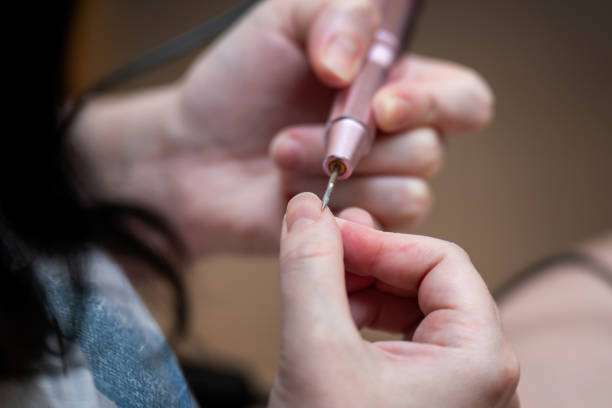
Reason 4: Damaged main control board
The internal circuit board (PCB) of the main unit is responsible for controlling the rotation speed, current, and overload protection.
Aging or moisture damage may cause nail drill issues.
Random power outage
Unresponsive speed control
The light is on but doesn’t turn.
sudden shutdown and restart
Investigation methods:
Test with a different controller (if you have a spare).
Plug in the power and check if the computer screen flickers.
Test whether the power outage occurs at different speed settings.
Solve:
Replace the motor unit
If it can be repaired, have a professional check the resistors, capacitors, and power module.
Avoid placing the equipment near water sources or humid environments.
Reason 5: Drill bit jammed; excessive resistance triggers protection mechanism.
This is an important point that many beginners don’t know!
When the drill bit gets stuck on a nail, cuticle, or old glue, the load increases sharply, triggering the nail drill’s automatic shutdown mechanism.
Common situations:
Suddenly stopped while working on the side wall
Power off when sanding hard plastic
The drill bit is noticeably hot.
Why was the protection triggered?
To prevent the motor from burning out, the nail drill has an automatic circuit breaker.
How to solve:
Choose the appropriate drill bit (for hard plastic, use a coarse abrasive ring).
Do not press down hard; let the drill bit “sweep” gently.
Keep the drill bit at a 30–45 degree angle to the nail surface.
Keep moving while using it; do not stay in one place.
Reason 6: Loose interface—80% of users overlook it!
If there is poor contact where the handle plug is inserted into the main unit, power outages will occur repeatedly.
Performance:
Not inserted securely
It stops with a gentle touch during use.
The plug feels loose.
Investigation:
After pulling it out, reinsert it tightly.
Check if the socket is deformed.
Solve:
If the socket is loose, have a repair shop apply pressure to tighten it.
If the plug is damaged, the cable needs to be replaced.
If you purchase a budget-friendly model, it is recommended to upgrade to a more reliable and stable nail drill.
Reason 7: Overload protection is triggered due to prolonged use.
Even high-quality nail drills are not suitable for continuous high-speed operation for more than 30–40 minutes.
Performance:
Automatic power off after 15 minutes of use.
Similar to overheat protection
It can continue to be used after the speed is reduced.
Solution:
A work cycle is 10–15 minutes.
Let the controller cool down for 5 minutes during the process.
Avoid maintaining the highest speed for extended periods.
Reason 8: Excessive internal dust accumulation affects heat dissipation and current.
Nail art dust is extremely fine; if not cleaned regularly, it can get into the motor or control panel, causing:
Poor heat dissipation
Circuit short
Overload power failure
suggestion:
Blow the handle with a hairdryer on a cool setting every 1–2 weeks.
Disassemble the handle and clean off the dust once a month (if it has a detachable design).
Keep the workbench clean
Dust is the number one killer that causes wireless nail drills to fail.
Reason 9: Product quality issues or irreversible aging
If your nail drill:
Used for 1–2 years
Frequently falling
Repeated bending of wires
It’s a cheap model costing tens of yuan.
It is much more likely to lose power.
Determine if it is due to aging:
The motor noise is louder than before.
Unstable speed
Plugs and cables are loose
Occasionally there is a burnt smell
At this point, most damage is due to aging, and replacement is often more cost-effective than repair.

Quick self-test process
You can check in the following order:
Replace socket/charge
Check if the controller cable disconnects power immediately upon movement.
Try running without a drill bit.
Test speed at different gears
Let the device cool down for 10 minutes before trying again.
Observe whether it overheats or gets stuck.
Tested with different drill bits
Check if the main unit’s lighting is unstable.
If the power is still off after all checks, it is most likely a problem with the main unit or motor.
Summarize:
A nail drill might lose power, but they can generally be categorized into the following three main types:
1. Power supply system problem (power supply/adapter/battery)
2. Damaged handle or motor (most common)
3. The main control board is faulty (due to aging or moisture).
By following the steps outlined in this article, most problems can be easily identified and even resolved. If you still can’t solve them, consider our superior nail drill for safe and efficient salon-quality nails!